
Services
What we clean, and how.
Every job is quoted up front, done by the owner, and finished with a walkthrough. Here's exactly what's included in each service.
Gutter cleaningOur specialty
Clogged gutters overflow into fascia, siding, and foundations — the most expensive parts of your house to repair. Keeping water moving is the whole reason Gargoyle exists.
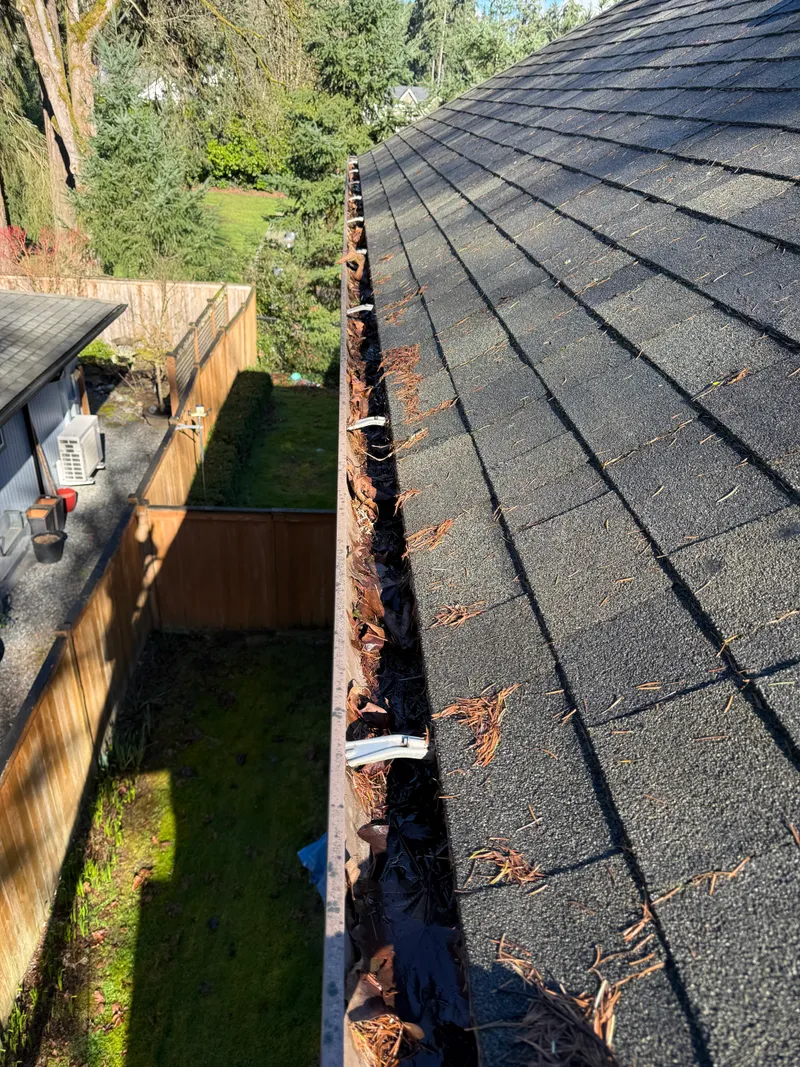
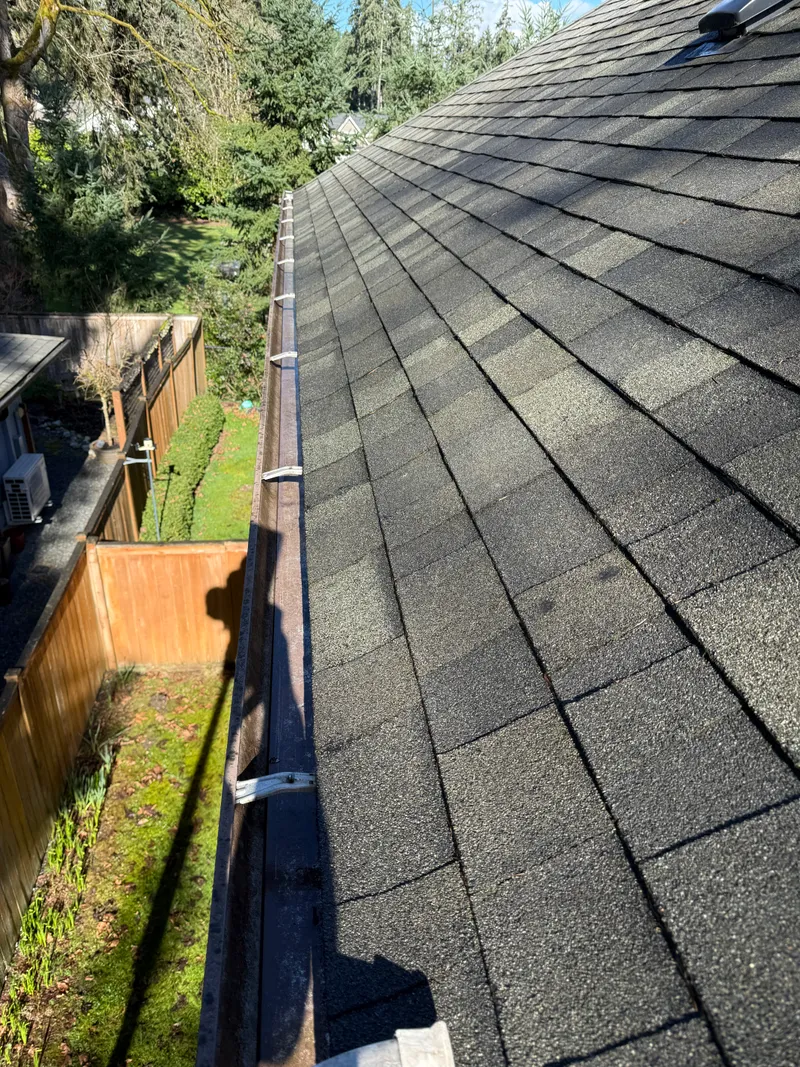
We clear gutters by blower or by hand, whichever the run calls for. Every run is cleared, every downspout is flushed and confirmed flowing all the way to ground level, and debris is blended into the landscape, composted, or bagged for you — never left in a pile. We also clear debris from valleys and behind the chimney and skylights, since it washes straight into the gutters otherwise. While we're up there, we look for the small problems — loose hangers, a gutter spike working its way out, a failing seam. What we can fix on the spot, we do. Anything bigger gets flagged with photos, plus a referral to a roofer or contractor we trust if you want one.
Every gutter job includes
- All gutters cleared by blower or by hand, roof edge to roof edge
- Downspouts flushed and confirmed flowing all the way to ground level
- Debris cleared from valleys and behind the chimney and skylights
- Debris blended in, composted, or bagged for you — nothing left in a pile
- Before-and-after photos of every run
- Minor fixes made on the spot — loose spikes and hangers resecured — plus a condition report flagging anything bigger
- Tops of gutter guards and screens cleared where installed
Most Seattle-area homes need this twice a year: after leaf-fall and again in spring. Join the GEM Club so you never have to think about it.
Roof cleaning & moss removal
Moss holds moisture against your shingles and pries them apart as it grows. In this climate, it's not cosmetic — it shortens the life of the roof.
Roof cleaning covers two separate things, and not every roof needs both.
Debris removal
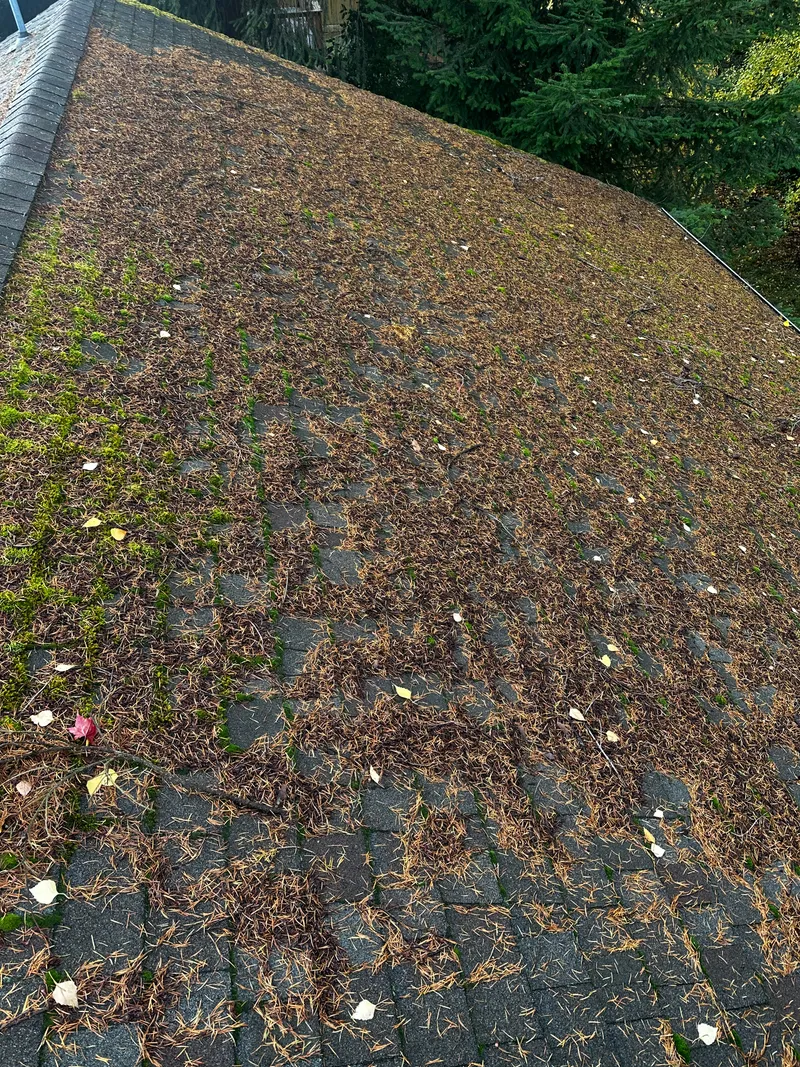
Leaves, needles, cones, and branches build up and hold moisture against the shingles even without a hint of moss. We clear the entire roof by hand and blower — not just the valleys and behind the chimney — no pressure washer, ever.
Moss treatment or removal
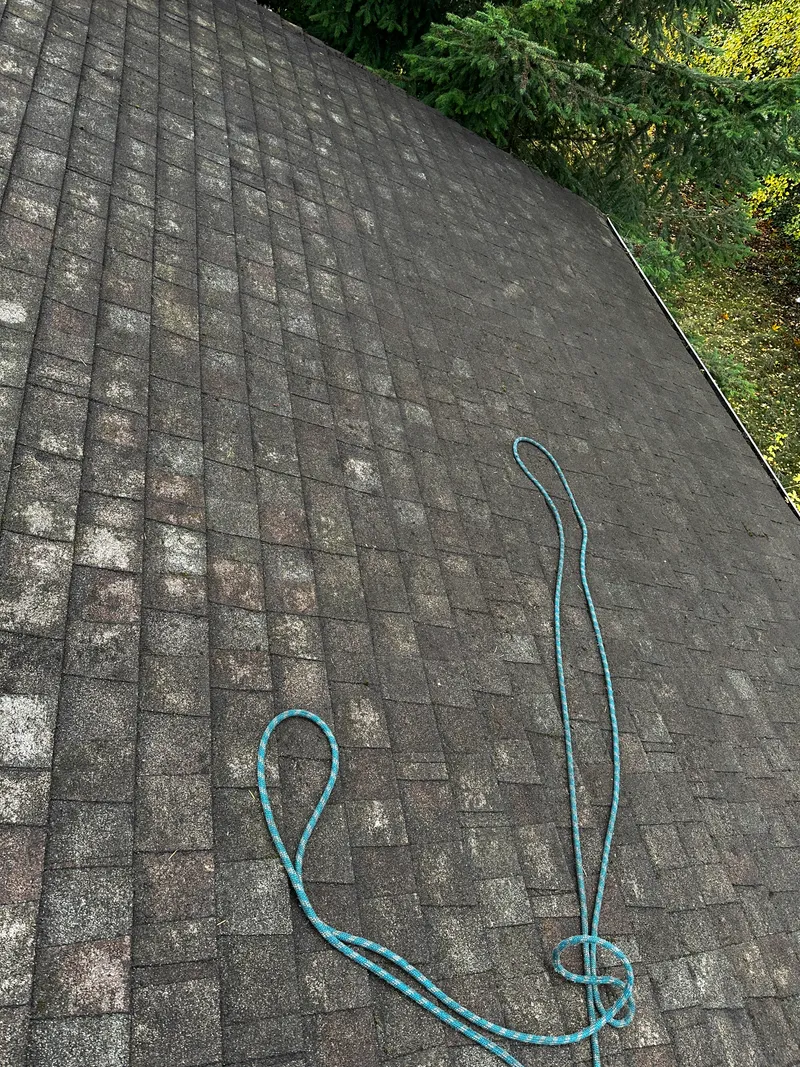
Moss on a Pacific Northwest roof isn't a sign anything's broken — it's just what shade, cool temperatures, and damp weather do here, especially on north-facing slopes under tree cover. How we treat it depends on how far it's gotten. Light coverage gets a preventative treatment alone — no scrubbing needed. Once moss has built up into thick, clumpy growth, we remove it first: brushed and blown off by hand, never scraped or pressure washed, since forcing embedded moss loose can pull shingle granules with it. Either way, we finish by treating the entire roof with a wet or dry treatment — not just the spots with visible moss — which kills what's there and slows regrowth everywhere else. Expect the moss to die back and rinse away with normal rain over the following few weeks — not disappear overnight.
Every roof job includes
- Debris cleared from the entire roof, not just the valleys and behind the chimney
- An honest look at how established any moss is before we recommend removal or treatment alone
- Hand-brushing and blowing for any built-up moss — no pressure washing, ever
- A wet or dry treatment applied to the entire roof, to kill existing moss and slow regrowth everywhere
- Gutter and downspout check after the work
- Before-and-after photos of the full roof
- Minor shingle repairs made on the spot where we can, and a referral to a trusted roofer for anything more extensive
Catch moss early and a yearly treatment alone often keeps a roof clear — wait too long and full removal costs more than prevention would have.
Pressure washing
Driveways, patios, sidewalks, and walkways — cleaned with real pressure, not a garden-hose rinse.
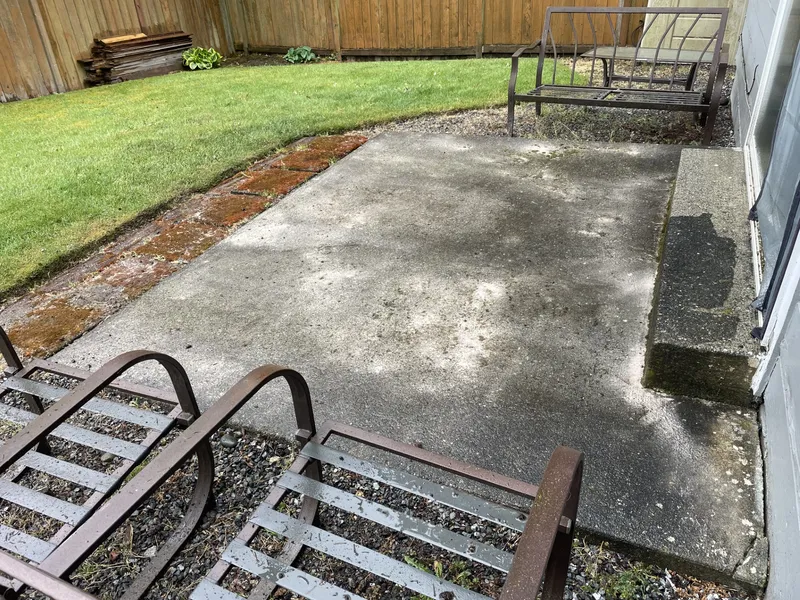
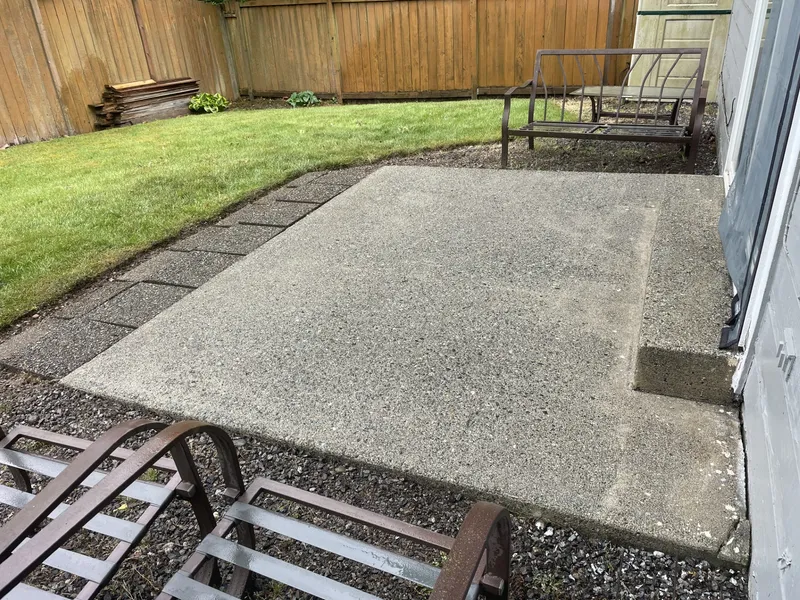
Pressure washing is concrete-focused: driveways, patios, sidewalks, and walkways. We pretreat with an SH (sodium hypochlorite) solution to break down algae, mildew, and grime, then finish with pressure suited to the surface. This does not include roofing — see roof cleaning above for why.
Wood decks and other surfaces are handled case by case, not as a standing service — ask and we'll tell you honestly whether it's a good fit. We never pressure wash siding; it's too easy to force water behind it and cause damage that doesn't show up until later.
Every pressure washing job includes
- Removes algae, mildew, and embedded grime from concrete and pavers
- Reduces slip hazards on sidewalks and walkways
- Protects surface materials from long-term organic buildup
- Runoff cleared from drains and walkways
- Before-and-after photos of every area cleaned
Pairs well with a gutter or window visit — ask about bundling for a full exterior refresh.
Window cleaning
Clean glass changes how a whole house feels — from the inside more than the outside.
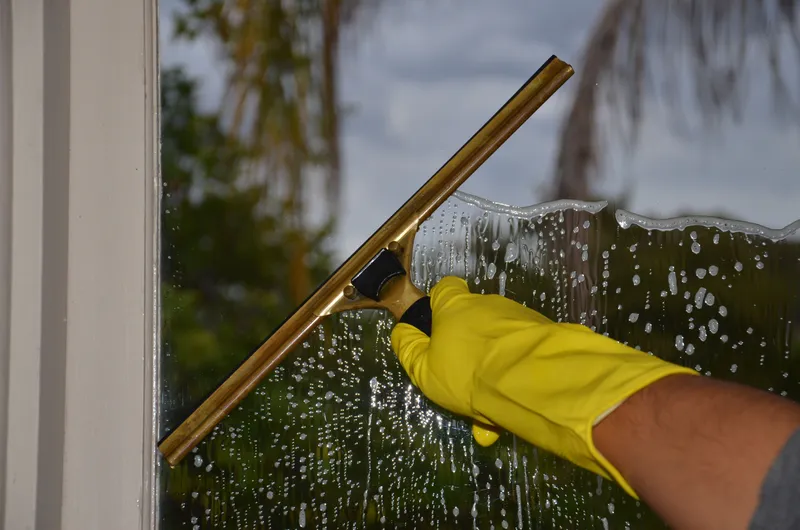
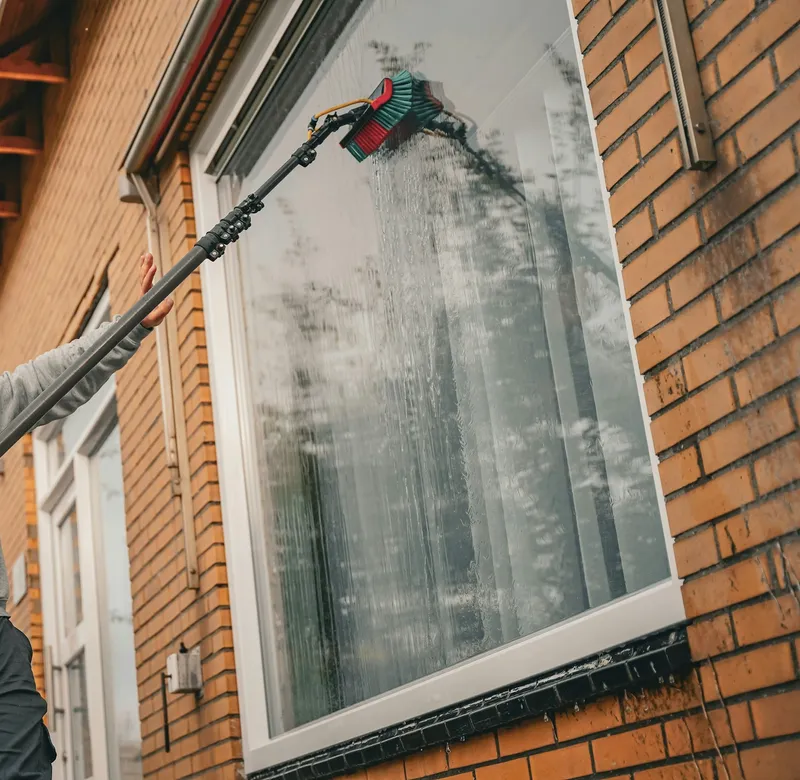
We clean exterior glass with mop and squeegee or a water-fed pole, whichever the window calls for — the water-fed pole reaches upper stories and hard-to-reach glass without a ladder against the house, and mop and squeegee handles everything else. Screens are brushed off and tracks and sills are wiped out, not just eyeballed. Screens that need more than a brush — a deep clean — are available as an add-on.
Every window job includes
- Exterior glass cleaned by mop and squeegee or water-fed pole
- Interior glass on request — shoes off, drop cloths down
- Screens brushed off (deep screen clean available as an add-on)
- Tracks and sills wiped clean
- Skylights and hard-to-reach glass
Pairs well with a gutter visit — bundling services on one trip saves you money.
Solar panel cleaning
Dust, pollen, and bird droppings can cut panel output by 15% or more. A clean array is a productive one.
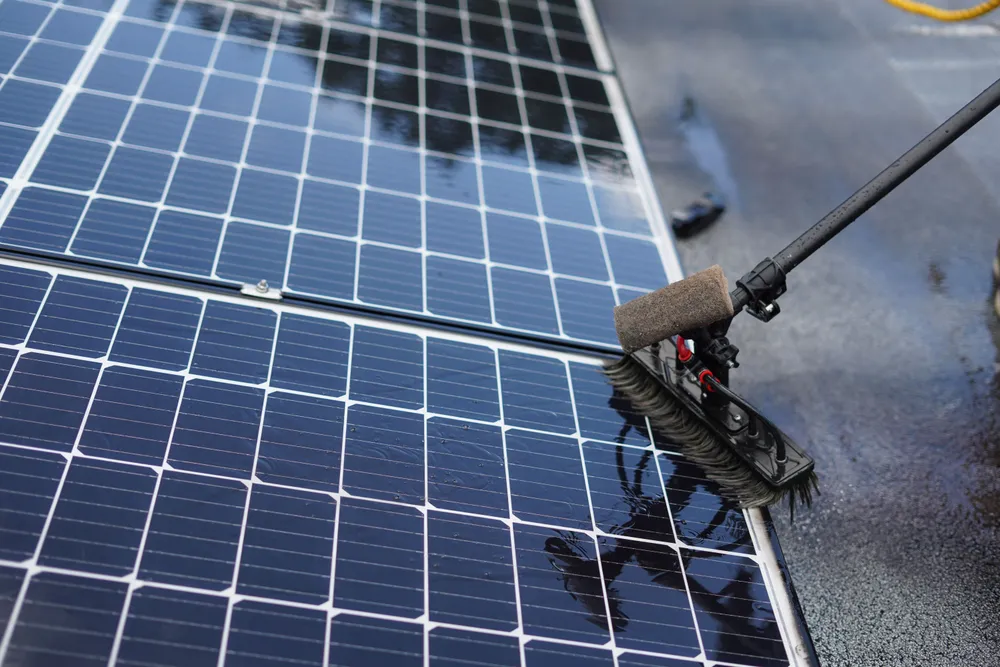
We wash panels with soft brushes and deionized water, which rinses spot-free without the streaking or mineral buildup tap water leaves behind. No pressure washers and no abrasive pads — both can crack glass, damage seals, or void the manufacturer's warranty.
Every solar cleaning job includes
- Panels washed with soft brushes and deionized water — no streaking
- No pressure washers or abrasive pads, ever
- Frames and mounting hardware wiped down
- Visual check for cracked cells or loose hardware
- Before-and-after photos of the full array
Best scheduled in spring and after pollen season, when output loss from buildup is highest.
Questions
Asked often, answered straight.
- How often should gutters be cleaned in the Seattle area?
- Most Puget Sound homes need gutters cleaned twice a year — once after the leaves drop in late fall, and once in spring to clear seed pods, needles, and moss. Homes under heavy tree cover may need a third visit.
- Do I need to be home during the service?
- No. As long as we can access the areas we are cleaning, you can go about your day. You will get before-and-after photos and a summary when the job is done.
- Do you pressure wash roofs?
- Never. Pressure washing strips granules off asphalt shingles and voids many roof warranties. We remove moss by hand and with soft brushing, then apply a treatment that keeps it from coming back.
- Do I need full moss removal, or just a treatment?
- It depends on how established the moss is. Light growth, or a roof that's just starting to show it, usually only needs a preventative treatment — no removal necessary. Once it's built up into thick, clumpy patches, we remove it by hand first, then treat. We'll tell you honestly which one your roof needs before any work starts.
- Are you licensed and insured?
- Yes. Gargoyle is a licensed Washington specialty contractor, bonded, and carries general liability insurance — happy to provide documentation on request.
- How does pricing work?
- You get a firm quote before any work starts, based on the size of your home and the condition of the job. The price we quote is the price you pay — if we find something unexpected, we talk to you before touching it.